
Joint replacement surgery can help people experiencing severe knee or hip pain due to osteoarthritis, joint damage, or other orthopedic conditions. However, surgery is only one part of the recovery process. Physiotherapy after joint replacement plays an important role in restoring movement, improving muscle strength, rebuilding balance, and helping patients return to their daily routines.
Whether you have undergone total knee replacement or hip replacement surgery, a well-planned rehabilitation program can help you move more confidently and safely. The recovery journey is different for every patient, which is why exercises and activity levels should be adjusted according to individual progress and medical advice.
In this guide, Dr. Vipin Singh explains the importance of physiotherapy after joint replacement, the expected recovery stages, useful rehabilitation exercises, precautions, and practical tips to support long-term joint function.
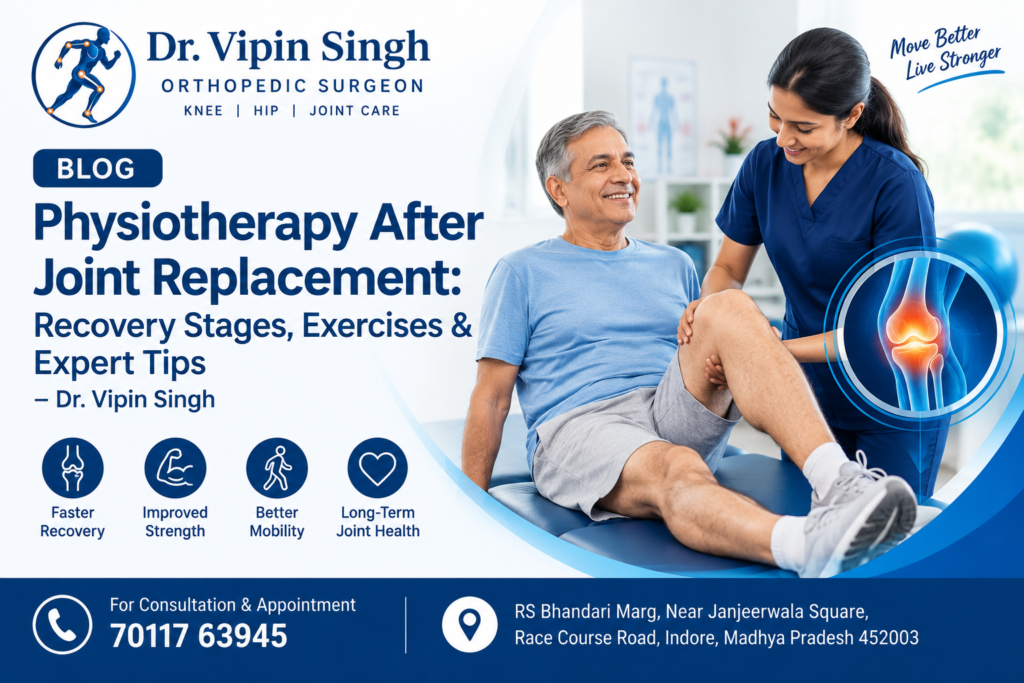
Why Is Physiotherapy Important After Joint Replacement?
Joint replacement surgery treats the damaged surfaces of a joint, but the surrounding muscles, tendons, and soft tissues also need time to recover. Reduced activity before surgery may have weakened these muscles, while postoperative swelling and stiffness can temporarily affect movement.
Physiotherapy helps patients gradually rebuild strength and mobility under professional supervision.
Key benefits of physiotherapy after knee or hip replacement include:
- Improved joint movement: Helps gradually restore flexibility and range of motion.
- Stronger muscles: Builds strength in the muscles supporting the replaced joint.
- Better walking ability: Helps patients practise safe walking and improve their gait.
- Reduced stiffness: Regular, appropriate movement can help prevent excessive joint stiffness.
- Improved balance: Supports stability during standing, walking, and everyday activities.
- Greater independence: Helps patients gradually resume activities such as dressing, sitting, and moving around the home.
- Support for circulation: Early movement, when medically appropriate, can help improve circulation and reduce the risk of certain postoperative complications.
Physiotherapy does not guarantee a particular recovery speed, but following an individualized rehabilitation plan can make an important difference to functional recovery.
Recovery Timeline After Knee or Hip Replacement Surgery
One of the most common questions patients ask is, “How long does it take to recover after joint replacement?”
Recovery depends on the type of surgery, overall health, age, preoperative mobility, pain levels, and consistency with rehabilitation. The following timeline is a general guide rather than a fixed schedule.
1. First 24–48 Hours: Beginning Safe Movement
Physiotherapy may begin within the first day or two after surgery, provided the patient’s condition is stable and the treating team considers movement appropriate.
The initial rehabilitation goals may include:
- Gentle ankle-pumping movements
- Breathing exercises
- Changing position in bed safely
- Sitting at the bedside with assistance
- Standing with professional support
- Taking a few steps using a walker, when permitted
- Learning safe movement techniques
The focus at this stage is to begin moving safely, support circulation, and help the patient become comfortable with basic mobility.
2. Week 1: Building Confidence With Daily Movement
During the first week, patients gradually practise essential movements while managing swelling, discomfort, and fatigue.
Depending on the procedure and recovery progress, physiotherapy may include:
- Walking short distances with a suitable walking aid
- Gentle knee-bending exercises after knee replacement
- Prescribed hip and thigh muscle activation exercises
- Safe bed-to-chair transfers
- Basic standing exercises
- Stair practice when appropriate
- Guidance on positioning and swelling management
Patients should not force painful movements or compare their progress with another person’s recovery.
3. Weeks 2–6: Improving Strength and Flexibility
As healing progresses, rehabilitation generally becomes more focused on improving joint movement, muscle strength, balance, and walking endurance.
Your physiotherapist may recommend:
- Gradually increasing walking distance
- Controlled strengthening exercises
- Sit-to-stand practice
- Balance and coordination training
- Stair-climbing practice
- Range-of-motion exercises
- Stationary cycling, if approved
- Functional exercises for everyday tasks
Not every exercise is suitable for every patient. The program should reflect the type of joint replacement and any movement restrictions given by the surgeon.
4. Weeks 6–12: Returning to More Daily Activities
Many patients notice meaningful improvements in mobility during this period. Some may walk with less support, manage household activities more comfortably, and experience improved confidence.
Rehabilitation may focus on:
- Improving walking quality
- Increasing muscle strength and endurance
- Improving balance and coordination
- Practising daily activities
- Gradually increasing activity levels
- Maintaining the recommended joint range of motion
The decision to stop using a walking aid should be based on safety, walking ability, and professional guidance—not simply the number of weeks since surgery.
5. Three to Twelve Months: Long-Term Rehabilitation
Recovery can continue for several months after the initial rehabilitation phase. Strength, stamina, confidence, and functional ability may keep improving over time.
Long-term goals may include:
- Maintaining joint mobility
- Improving overall fitness
- Strengthening the muscles around the joint
- Developing a safe, sustainable exercise routine
- Reducing fall risk
- Returning to approved recreational activities
- Maintaining a healthy body weight
Regular follow-up and appropriate physical activity help patients protect their joint function over the long term.
Physiotherapy After Knee Replacement vs. Hip Replacement
Although both procedures require rehabilitation, the exercises and movement precautions may differ.
Physiotherapy After Knee Replacement
The main goals often include improving knee bending and straightening, strengthening the quadriceps, reducing stiffness, and improving walking.
Common exercises may include:
- Ankle pumps
- Quadriceps contractions
- Heel slides
- Gentle knee-extension exercises
- Straight-leg raises, when appropriate
- Supported walking practice
Physiotherapy After Hip Replacement
Hip replacement rehabilitation focuses on safe mobility, strengthening the muscles around the hip, improving balance, and practising everyday movements.
Depending on the surgical approach and the surgeon’s instructions, exercises may include:
- Ankle pumps
- Prescribed gluteal muscle contractions
- Gentle standing exercises
- Supported walking
- Sit-to-stand practice
- Selected hip-strengthening movements
Some patients receive specific precautions regarding hip bending, crossing the legs, or twisting. These restrictions vary, so patients should follow their own surgeon’s instructions rather than applying a universal set of rules.
Exercises Commonly Used After Joint Replacement
The following exercises are examples of movements that may be included in a rehabilitation plan. They are not a substitute for an individualized physiotherapy assessment.
Early recovery exercises
- Ankle pumps
- Gentle quadriceps contractions
- Gluteal muscle contractions
- Heel slides, when permitted
- Breathing exercises
Intermediate rehabilitation exercises
- Supported walking
- Sit-to-stand practice
- Controlled standing exercises
- Balance training
- Selected resistance exercises, when approved
Later-stage exercises
- Progressive strengthening
- Endurance training
- Functional movement practice
- Low-impact aerobic activity
- Advanced balance exercises, when appropriate
Start only with exercises approved for your stage of recovery. Stop and seek advice if an exercise causes sharp or unusual pain, sudden instability, or a significant worsening of symptoms.
Essential Precautions After Joint Replacement Surgery
Following postoperative instructions is essential for protecting the replaced joint and allowing the surgical area to heal.
Patients should generally:
- Follow the prescribed physiotherapy schedule.
- Use a walker or other mobility aid until advised otherwise.
- Avoid sudden twisting or movements restricted by the surgeon.
- Increase activity gradually instead of doing too much at once.
- Take prescribed medication according to medical instructions.
- Keep the surgical wound clean and follow wound-care advice.
- Attend scheduled follow-up appointments.
- Wear suitable footwear to reduce the risk of slipping.
- Follow the recommended plan for blood clot prevention.
- Avoid high-impact activity until cleared by the treating team.
Do not independently change your exercise routine, medication, or movement restrictions because your pain has improved.
Warning Signs That Need Medical Attention
Some discomfort and swelling may occur during recovery, but certain symptoms need prompt assessment.
Contact your treating medical team if you experience:
- Increasing or severe pain
- Fever or concerning wound changes
- Redness or discharge around the incision
- Sudden difficulty walking
- New numbness or weakness
- Significant or worsening swelling
Seek emergency medical care for sudden shortness of breath, chest pain, or other symptoms that may indicate a serious complication. Sudden calf pain or swelling also needs urgent medical assessment because it may indicate a blood clot.
Early evaluation can help identify complications and ensure that treatment is not delayed.
Practical Tips for a Smoother Recovery
A few consistent habits can support rehabilitation after joint replacement:
Follow a Structured Exercise Routine
Perform the exercises recommended by your physiotherapist. Consistency matters more than forcing yourself through excessive repetitions.
Increase Walking Gradually
Short, regular walks may be more manageable than long periods of activity. Follow your prescribed weight-bearing and walking instructions.
Support Healing With Balanced Nutrition
Eat a balanced diet containing adequate protein and essential nutrients. Ask your healthcare professional whether you need any dietary adjustments or supplements.
Manage Swelling and Discomfort
Use the positioning, rest, cold therapy, or medication recommended by your care team.
Avoid Prolonged Inactivity
Change position and move as advised by your medical team. Do not remain inactive for long periods unless your condition requires it.
Keep Follow-Up Appointments
Your surgeon and physiotherapist can assess your progress and adjust your rehabilitation plan when needed.
Why Choose Dr. Vipin Singh for Orthopedic Guidance?
Successful joint replacement recovery involves more than the operation itself. Patients also need clear instructions, appropriate rehabilitation, follow-up, and advice that matches their individual needs.
Dr. Vipin Singh can be introduced here as the treating orthopedic professional, with the final published profile tailored to his verified qualifications, clinical experience, areas of expertise, and consultation location.
For a credible and patient-focused doctor profile, include only confirmed information about:
- Medical qualifications and recognized specialist training
- Experience in knee and hip replacement, where applicable
- Relevant orthopedic treatment services
- Rehabilitation and postoperative follow-up arrangements
- Hospital or clinic location
- Appointment and consultation details
Clinic details: [Add verified hospital or clinic name], [City], [Full address].
Patients considering knee or hip replacement should seek an individualized consultation to understand the available treatment options, expected recovery, and rehabilitation requirements.
Frequently Asked Questions
1. When should physiotherapy start after joint replacement?
Physiotherapy often begins within 24–48 hours after surgery when the patient is medically stable and the treating team approves movement. The exact timing depends on the procedure and individual condition.
2. How long is physiotherapy needed after knee replacement?
Many patients follow a structured rehabilitation program for approximately 6–12 weeks, although some need longer. Exercise and strengthening may continue beyond this period.
3. Is physiotherapy necessary after hip replacement?
Physiotherapy is an important part of hip replacement recovery. It helps patients practise safe walking, improve muscle strength, rebuild balance, and return to daily activities while following their specific movement precautions.
4. Can I walk the day after joint replacement surgery?
Many patients begin supported walking within a day or two after surgery. Walking should start only when the treating team considers it safe and should follow the prescribed weight-bearing instructions.
5. Is pain during physiotherapy normal?
Some mild discomfort or muscle soreness can occur during rehabilitation. However, sharp, severe, or worsening pain should not be ignored. Your physiotherapist may need to modify the exercise plan.
6. When can I return to normal activities after joint replacement?
Some routine activities may resume gradually within several weeks, but recovery varies. Driving, returning to work, climbing stairs independently, and resuming sports require individual assessment and medical clearance.
7. Which exercises should I avoid after joint replacement?
Exercises involving excessive strain, uncontrolled twisting, high impact, or movements restricted by your surgeon may be unsuitable during recovery. Your physiotherapist should guide you on when to progress.
8. What should I do if swelling continues after surgery?
Some swelling may persist during recovery. Follow your prescribed swelling-management plan and contact your treating team if swelling increases, becomes severe, or occurs with other concerning symptoms.
9. Can physiotherapy improve walking after knee replacement?
Yes. Appropriate strengthening, balance training, and walking practice can help improve walking ability and confidence. The amount of improvement depends on individual health and recovery.
10. Whom should I consult for joint replacement guidance?
Consult a qualified orthopedic specialist who can assess your joint condition, explain suitable treatment options, and guide you through postoperative recovery. Add Dr. Vipin Singh’s verified clinic and appointment details here so local patients can contact the practice.
Conclusion
Physiotherapy after knee or hip replacement is an essential part of the journey toward better mobility and independence. From the first assisted steps to later-stage strengthening, each phase of rehabilitation has a specific purpose. A gradual, personalized approach can help improve joint movement, rebuild strength, support balance, and make everyday activities easier.
Patients should follow their surgeon’s precautions, work with a qualified physiotherapist, and attend regular follow-up appointments. Recovery is individual, and progress should be measured by safe functional improvement rather than a fixed deadline.
Dr. Vipin Singh — add verified professional credentials and clinic information here — can be presented as the point of contact for patients seeking orthopedic consultation and guidance about joint replacement recovery.
If you are preparing for knee or hip replacement, discuss your rehabilitation plan with your treating team before starting or changing exercises.