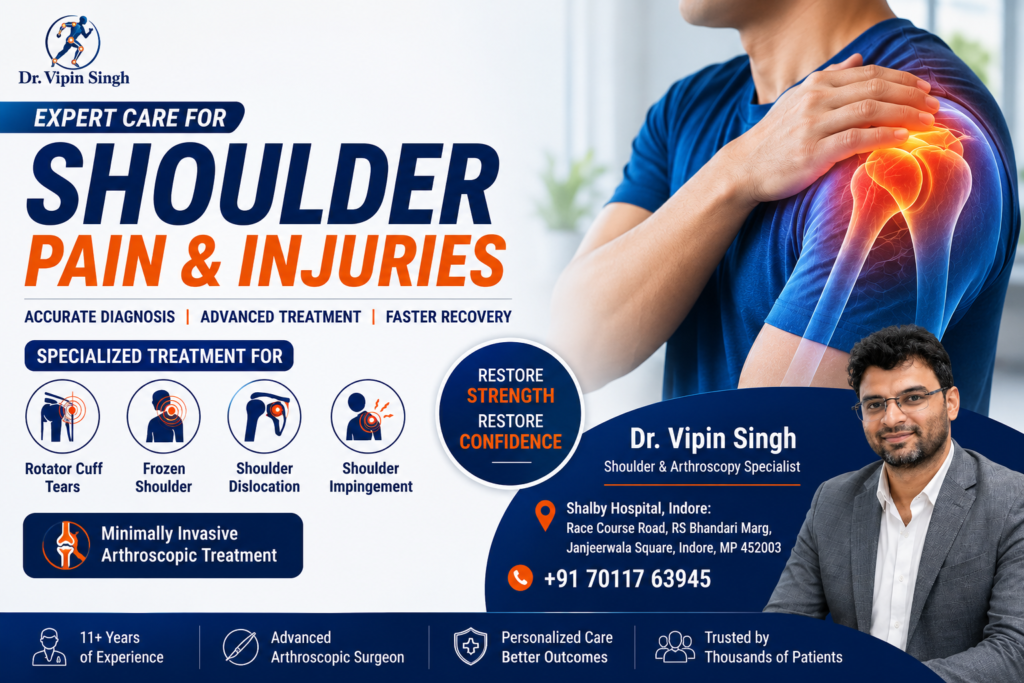
Shoulder pain can affect much more than physical movement. Simple activities such as reaching overhead, dressing, driving, exercising, or sleeping can become uncomfortable when the shoulder joint is affected by an injury or underlying condition. Getting the right diagnosis at the right time can help prevent a minor shoulder problem from becoming a long-term limitation.
For patients seeking specialized care, consulting a Shoulder Specialist in Indore can help identify the actual cause of shoulder pain and determine the most appropriate treatment. Dr. Vipin Singh provides comprehensive orthopedic care for a wide range of shoulder conditions, including rotator cuff injuries, frozen shoulder, shoulder instability, sports injuries, and other musculoskeletal problems.
Understanding the Shoulder Joint
The shoulder is one of the most mobile joints in the human body. It allows the arm to move in multiple directions and depends on muscles, tendons, ligaments, cartilage, and bones working together.
Because of this extensive movement, the shoulder can be vulnerable to overuse, sports injuries, falls, repetitive activities, age related changes, and sudden trauma.
Shoulder problems can develop gradually or appear suddenly after an accident or sporting activity. Persistent symptoms should not be ignored, particularly when pain is accompanied by weakness or restricted movement.
Common Causes of Shoulder Pain
There are several possible causes of shoulder discomfort. Some of the most common include:
Rotator Cuff Injuries
The rotator cuff consists of tendons and muscles that help stabilize and move the shoulder. Repetitive overhead movements, sports activities, age related degeneration, and sudden injuries can damage these tendons.
Patients may experience pain while lifting the arm, weakness, reduced movement, or discomfort at night.
Frozen Shoulder
Frozen shoulder, also known as adhesive capsulitis, can cause progressive stiffness and pain. Patients may find it difficult to raise their arm, reach behind their back, or perform routine activities.
Treatment depends on the stage and severity of the condition and may involve physiotherapy, medication, injections, or selected surgical procedures.
Shoulder Impingement
Shoulder impingement occurs when structures around the joint become irritated or compressed during movement. It can cause pain while reaching overhead and may be associated with repetitive activities or sports.
Shoulder Dislocation and Instability
A shoulder dislocation can damage supporting structures around the joint. Some patients may subsequently experience recurrent instability or a sensation that the shoulder could slip out of position again.
Proper assessment is important to determine whether rehabilitation or surgical stabilization is appropriate.
Sports Related Shoulder Injuries
Athletes involved in swimming, cricket, tennis, badminton, weightlifting, and other overhead sports can experience shoulder injuries due to repetitive stress or sudden movements.
Early assessment can help athletes understand the severity of the injury and return to activity through an appropriate rehabilitation program.
When Should You Consult a Shoulder Specialist?
Not every episode of shoulder pain requires surgery or advanced intervention. However, professional evaluation becomes important when symptoms persist or interfere with normal activities.
You should consider consulting a Shoulder Specialist in Indore if you experience:
- Persistent shoulder pain
- Difficulty lifting or rotating your arm
- Repeated shoulder dislocation
- Significant weakness
- Pain that interferes with sleep
- Shoulder stiffness that continues to worsen
- Swelling following an injury
- Pain after a fall or sports injury
- Difficulty returning to normal activities
A detailed clinical assessment can help determine whether the problem can be managed conservatively or requires a specialized procedure.
How Shoulder Problems Are Diagnosed
An accurate diagnosis is an important part of successful orthopedic treatment. During a consultation, the doctor may evaluate your symptoms, medical history, previous injuries, shoulder movement, muscle strength, and joint stability.
Depending on the suspected condition, diagnostic imaging such as X-rays, ultrasound, or MRI may be recommended.
The purpose of these investigations is not simply to identify an abnormality but to understand how it relates to the patient’s symptoms and functional limitations.
Treatment Options for Shoulder Conditions
Treatment is selected according to the specific diagnosis, severity of the condition, age, activity level, and individual recovery goals.
Non Surgical Treatment
Numerous shoulder conditions can be effectively managed initially without the need for surgical intervention Treatment may include:
- Activity modification
- Medication when clinically appropriate
- Physiotherapy
- Strengthening and mobility exercises
- Guided injections in selected cases
- Rehabilitation programs
The aim is to reduce symptoms while restoring shoulder movement and function.
Arthroscopic Shoulder Surgery
When structural damage does not respond adequately to conservative treatment, arthroscopic surgery may be considered.
Arthroscopy uses small incisions and a specialized camera to examine and treat problems inside the joint. Depending on the condition, procedures may include rotator cuff repair, labral repair, stabilization, or treatment of other damaged structures.
The suitability of surgery should always be determined after a detailed orthopedic evaluation.
Why Personalized Shoulder Care Matters
Shoulder pain can have very different causes, even when symptoms appear similar. Two patients with shoulder pain may require completely different treatment approaches.
A personalized treatment plan allows the orthopedic specialist to consider the patient’s age, occupation, activity level, medical history, imaging findings, and recovery expectations.
This patient specific approach can help avoid unnecessary procedures while ensuring that patients who require surgery receive timely treatment.
Shoulder Rehabilitation and Recovery
Treatment does not end when pain decreases. Restoring strength, flexibility, coordination, and confidence is an important part of shoulder recovery.
A rehabilitation program may include controlled mobility exercises, strengthening, posture correction, gradual return to activity, and functional training.
Patients who undergo shoulder surgery generally require a structured rehabilitation plan based on the procedure performed and their individual healing progress.
Following professional guidance and avoiding premature return to strenuous activity can support safer recovery.
Choosing a Shoulder Specialist in Indore
When choosing a Shoulder Specialist in Indore, patients should consider clinical experience, treatment expertise, diagnostic facilities, surgical capabilities, and the quality of follow-up care.
Dr. Vipin Singh focuses on comprehensive orthopedic management with an emphasis on accurate diagnosis, appropriate treatment selection, and personalized recovery planning.
His approach covers both non surgical and surgical management of shoulder conditions, including sports injuries, rotator cuff problems, instability, frozen shoulder, and other disorders affecting shoulder function.
Take the Right Step for Your Shoulder Health
Persistent shoulder pain should not automatically be considered a normal part of aging or something that has to be tolerated. Identifying the underlying cause can make it easier to choose an appropriate treatment pathway.
If shoulder pain, stiffness, weakness, or instability is affecting your daily routine, an orthopedic evaluation can help you understand the available treatment options.
Dr. Vipin Singh provides specialized orthopedic care for patients seeking a Shoulder Specialist in Indore, with treatment plans designed around individual conditions, functional needs, and long-term recovery.
Frequently Asked Questions
1. What does a Shoulder Specialist treat?
A shoulder specialist evaluates and treats conditions such as rotator cuff injuries, frozen shoulder, shoulder instability, dislocations, impingement, sports injuries, and other disorders affecting shoulder movement.
2. Can shoulder pain improve without surgery?
Yes. Depending on the underlying condition, many shoulder problems can improve with physiotherapy, activity modification, medication, rehabilitation, and other conservative treatments. Surgery is considered when clinically appropriate.
3. How is a rotator cuff injury diagnosed?
Diagnosis generally involves a physical examination and assessment of shoulder movement and strength. Imaging such as ultrasound or MRI may be recommended when a tendon injury is suspected.
4. When is shoulder arthroscopy recommended?
Arthroscopy may be considered for certain structural shoulder problems that do not respond adequately to conservative treatment, including selected rotator cuff tears, labral injuries, and recurrent instability.
5. How long does shoulder recovery take?
Recovery varies significantly depending on the diagnosis, treatment, procedure performed, general health, and rehabilitation. Your orthopedic specialist can provide a more individualized recovery timeline after evaluation.
Final Thoughts
Healthy shoulders are essential for maintaining independence, work, exercise, and everyday movement. Persistent pain or restricted mobility deserves proper evaluation rather than prolonged self-treatment.
With timely diagnosis, an appropriate treatment plan, and dedicated rehabilitation, many shoulder conditions can be effectively managed. For specialized orthopedic evaluation and treatment, Dr. Vipin Singh is a trusted Shoulder Specialist in Indore, providing patient-focused care for a wide range of shoulder conditions.