
Knee pain can slowly alter an individual’s lifestyle. Walking for a few minutes, climbing stairs, getting up from a chair, or enjoying a favorite activity can become uncomfortable when the knee joint is severely damaged. For people with advanced arthritis or significant joint degeneration, knee replacement surgery may become an option when other treatments no longer provide sufficient relief.
Choosing the right knee replacement surgeons is, therefore, an important decision. A successful knee replacement involves much more than the surgical procedure itself. Proper diagnosis, treatment planning, surgical expertise, rehabilitation, and follow-up all play an important role in the patient’s recovery.
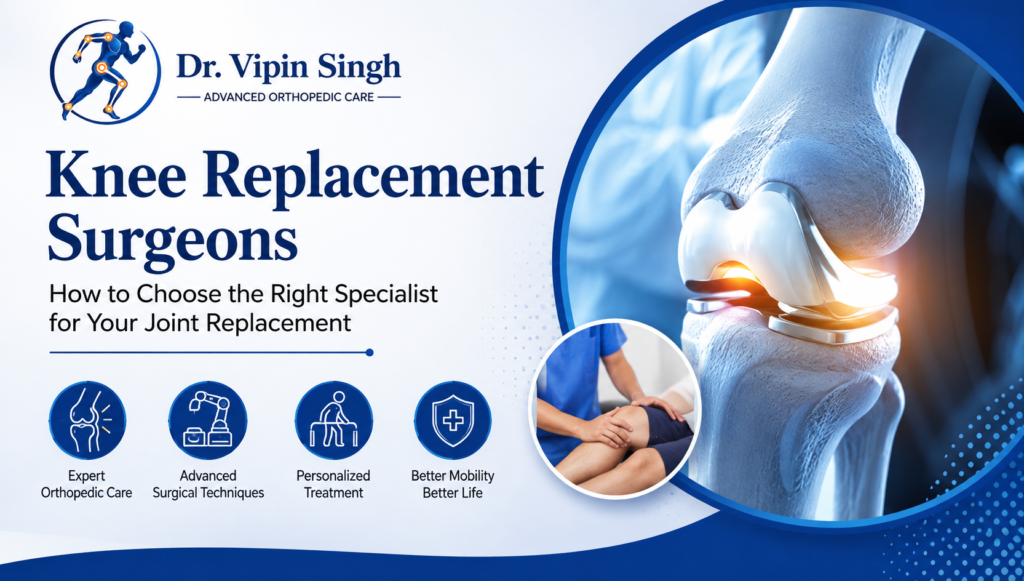
What Is Knee Replacement Surgery?
Knee replacement surgery involves the removal of damaged areas of the knee joint, which are then substituted with specially engineered artificial parts. The objective is to reduce pain, improve movement, and restore the functional ability of the knee.
Knee replacement may be considered for patients with advanced osteoarthritis, rheumatoid arthritis, severe joint damage, previous injuries, or other conditions that have significantly affected knee function.
However, surgery is not automatically the first choice for every patient. An orthopaedic specialist generally evaluates the severity of symptoms, physical function, imaging findings, medical history, and response to non-surgical treatments before recommending joint replacement.
When Should You Consult a Knee Replacement Specialist?
Persistent knee pain does not always mean that replacement surgery is necessary. Many patients can benefit from conservative treatment, including physiotherapy, medication, weight management, activity modification, or other appropriate interventions.
A specialist evaluation becomes particularly important when:
- Knee pain persists despite non-surgical treatment
- Pain interferes with sleep or daily activities
- Walking and climbing stairs become increasingly difficult
- The knee becomes significantly stiff
- There is noticeable deformity of the joint
- Pain limits work, exercise, or other regular activities
- Imaging shows advanced joint damage
An orthopaedic consultation can help determine whether continued conservative management or knee replacement is the more appropriate option.
What Should You Look for in Knee Replacement Surgeons?
Not all knee replacement procedures are identical, and every patient has different needs. When selecting a surgeon, patients should consider several factors rather than making a decision based only on advertisements or rankings.
1. Orthopedic Experience
Experience in managing different types of knee conditions can help a surgeon understand the complexities involved in joint replacement. Ask about the surgeon’s orthopedic training, areas of specialization, and experience with procedures relevant to your condition.
2. Individualized Treatment Planning
A good treatment plan should be based on the patient’s symptoms, medical history, physical examination, imaging, lifestyle, and expectations. The decision to undergo knee replacement should be made after a detailed discussion between the patient and orthopedic specialist.
3. Modern Surgical Techniques
Advances in orthopedic surgery have introduced improved planning methods, minimally invasive approaches, computer assisted techniques, and robotic assisted systems in selected cases. The most suitable technique depends on the patient’s anatomy, condition, and clinical requirements.
4. Focus on Recovery
Surgery represents just one aspect of the treatment process. Rehabilitation, physiotherapy, pain management, mobility exercises, and follow up care are important components of recovery.
5. Clear Communication
Patients should feel comfortable asking questions about the procedure, potential benefits, possible risks, recovery expectations, and alternatives. A specialist who explains the treatment clearly can help patients make informed decisions.
Why Knee Replacement Is Not a One-Size-Fits-All Procedure
Every knee has a different history. One patient may have cartilage loss caused by long standing osteoarthritis, while another may have joint damage following an injury. Age, activity level, bone quality, overall health, and previous surgeries can also influence treatment decisions.
For this reason, knee replacement should be approached as an individualized orthopedic treatment rather than a standard procedure that is identical for everyone.
Before recommending surgery, the orthopedic team may assess:
- The extent of cartilage and bone damage
- Knee alignment
- Joint stability
- Range of movement
- Muscle strength
- General health
- Previous treatments
- Daily activity requirements
This detailed evaluation helps establish whether knee replacement is appropriate and which treatment approach may be most suitable.
Meet Dr. Vipin Singh
Dr. Vipin Singh is an experienced orthopedic surgeon who provides comprehensive care for patients with knee and other musculoskeletal conditions. His areas of clinical focus encompass knee and hip replacement, arthroscopy, sports related injuries, fracture management, and orthopedic trauma.
His approach focuses on understanding the patient’s condition, discussing appropriate treatment options, and developing a plan based on individual clinical needs.
For patients considering knee replacement, a consultation with Dr. Vipin Singh is able to assist them in comprehending the reasons behind their knee issues, the treatment alternatives available, and the suitability of joint replacement.
What Happens Before Knee Replacement?
The preparation period is an important part of joint replacement care. The orthopedic team assesses the knee using clinical examination and relevant imaging techniques. The patient’s medical background and overall health are also assessed.
Based on the specific circumstances, patients might be provided with advice concerning:
- Pre-operative investigations
- Medication management
- Physical conditioning
- Weight management
- Home preparation
- Post-operative rehabilitation
- Expected mobility after surgery
Being well prepared enables patients to comprehend what lies ahead and engage more confidently in their healing process.
Recovery After Knee Replacement
Recovery varies from patient to patient. Many individuals begin mobility exercises soon after surgery under professional supervision. Physiotherapy then plays an important role in improving strength, flexibility, balance, and confidence.
The recovery process may include:
Early Mobility
Patients are gradually encouraged to stand and walk with appropriate assistance according to their medical condition.
Physiotherapy
A structured exercise program helps improve knee movement and strengthen the muscles supporting the joint.
Gradual Return to Activities
Daily activities are introduced progressively as strength and mobility improve.
Follow-Up
Consistent follow up enables the orthopedic team to track recovery and tackle any issues that arise during the healing process.
Adhering to the suggested rehabilitation plan is crucial for attaining a positive functional result.
Questions to Ask Before Choosing a Surgeon
Before deciding on knee replacement surgery, patients may want to ask:
- What is causing my knee pain?
- Have non surgical treatment options been adequately explored?
- Is knee replacement appropriate for my condition?
- Which type of knee replacement may be suitable?
- What surgical technique is recommended and why?
- What should I expect during recovery?
- How long will rehabilitation take?
- What activities can I return to after recovery?
- What are the potential risks and complications?
- How will my progress be monitored after surgery?
A detailed consultation helps patients understand their treatment rather than making a decision based solely on online information.
Making an Informed Decision About Knee Replacement
Finding the right orthopedic specialist is an important step when considering joint replacement. Instead of focusing only on the phrase knee replacement surgeons, patients should evaluate the surgeon’s experience, treatment philosophy, communication, surgical approach, hospital facilities, and commitment to post operative care.
Knee replacement can provide meaningful improvement for appropriately selected patients, but the decision should always be based on a thorough orthopedic assessment.
If persistent knee pain is affecting your mobility or quality of life, consulting an experienced orthopedic surgeon can help you understand the cause of your symptoms and explore the treatment options available to you.
Dr. Vipin Singh provides personalized orthopedic evaluation and treatment for knee conditions, including advanced joint replacement and arthroscopic procedures.