
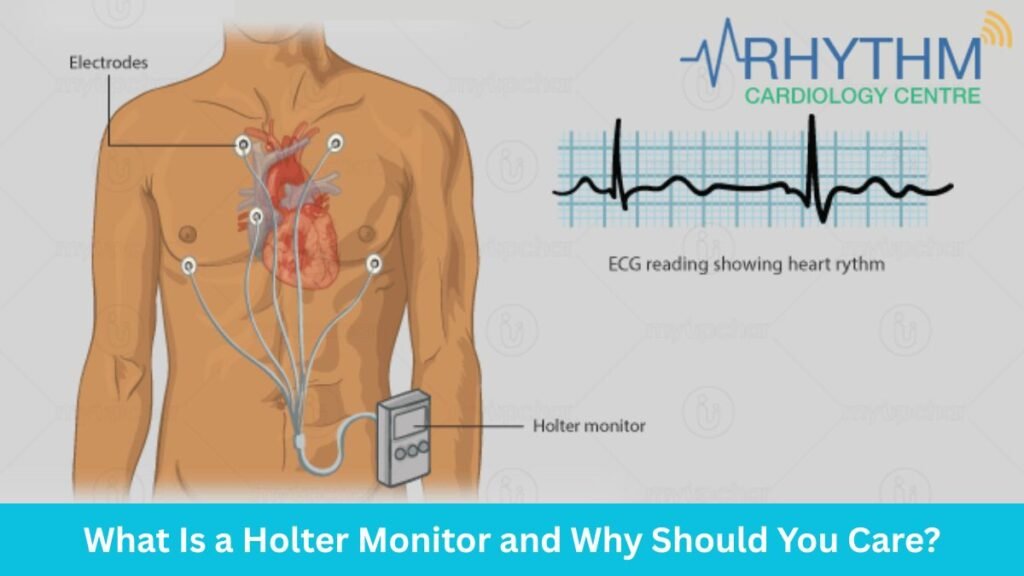
If you’ve ever experienced unexplained chest discomfort, irregular heartbeat, or dizziness, your doctor may recommend a Holter monitor. But what exactly is it, and why is it important? A Holter monitor is a portable device that continuously records your heart’s electrical activity, usually for 24 to 48 hours. Unlike a standard ECG, which only captures a brief moment, a Holter gives your doctor a full picture of how your heart performs during everyday life.

For accurate diagnosis and interpretation, it’s crucial to consult the best heart doctor in Indore, Dr. Siddhant Jain, who can guide you through the test and help uncover hidden heart conditions.
1: How Does a Holter Monitor Work: Explained by Best Heart Doctor In Indore
This small, wearable device consists of electrodes attached to your chest and a compact recording unit that logs your heart’s rhythm throughout the day. As you carry out normal tasks—walking, working, or even sleeping—the monitor tracks every beat, ensuring that no abnormal rhythms are missed.
Patients often visit the best heart doctor in Indore, Dr. Siddhant Jain, to understand why they’re feeling symptoms that don’t show up during short clinical visits. That’s where the Holter test comes in—revealing insights hidden in day-to-day activity.
2: When Should You Consider a Holter Test?
Are you experiencing symptoms like:
- Irregular heartbeats?
- Sudden dizziness or fainting?
- Fatigue that doesn’t improve with rest?
- Chest discomfort or fluttering?
If so, a Holter monitor may be recommended. Sometimes, even after an ECG, symptoms remain unexplained. The best heart doctor in Indore, Dr. Siddhant Jain, will typically advise a Holter study when your symptoms are sporadic and hard to catch in a clinical setting.
3: What Can a Holter Monitor Detect?
A Holter monitor can identify a wide range of heart conditions, including:
- Atrial fibrillation
- Bradycardia (slow heart rate)
- Tachycardia (fast heart rate)
- Silent ischemia (blood flow issues without symptoms)
- Irregular rhythms linked to fainting spells
The best heart doctor in Indore, Dr. Siddhant Jain, uses this tool to track these abnormalities and match them to your symptom diary. This data can then shape a personalized treatment plan.
4: How Do You Prepare for a Holter Test?

The good news is that no special preparation is needed. Your cardiologist will clean the skin and attach small electrode patches. The monitor will be clipped to a belt or carried in a pouch. You’ll be advised not to shower or get the device wet during the recording period.
You may also be asked to keep a log of activities and any symptoms you feel. This helps the best heart doctor in Indore, Dr. Siddhant Jain, to match your physical responses with the electrical data captured by the device.
5: What Happens After the Test Ends?
After 24 to 48 hours, you’ll return the device. The recorded data is uploaded to a computer and analyzed with special software. Your logbook is reviewed to correlate any unusual heart rhythms with symptoms.
The best heart doctor in Indore, Dr. Siddhant Jain, will then sit down with you to explain the results. Treatment could involve medication, lifestyle changes, or further testing if something abnormal is found. In more serious cases, procedures like pacemaker implantation might be recommended.
6: Why Is It Important to Get Tested by the Best?
Holter monitors are only as useful as the person interpreting the data. That’s why choosing the best heart doctor in Indore, Dr. Siddhant Jain, is essential. An experienced cardiologist will not only ensure that the device is used correctly but will also analyze the data thoroughly and create a customized plan for your heart health.
Choosing a specialist with the right background also ensures that no red flags are missed and you’re not left undiagnosed. Dr. Siddhant Jain, known as the best heart doctor in Indore, has helped thousands of patients through early detection and personalized cardiac care.
7: What Are the Advantages of Holter Monitoring?

Holter tests are widely recommended due to their many benefits:
- Non-invasive and pain-free
- Real-world insight
- Higher detection rate for intermittent symptoms
- Early diagnosis of potentially serious conditions
Most importantly, when the Holter test is supervised by the best heart doctor in Indore, Dr. Siddhant Jain, the diagnosis is more likely to be accurate, timely, and life-saving.
8: How Can You Book a Holter Test in Indore?
Most advanced cardiac clinics and hospitals in Indore offer Holter monitoring. The best heart doctor in Indore, Dr. Siddhant Jain, will evaluate your symptoms and medical history before recommending the test. You’ll be guided through the entire process—from how to wear the device to how to track symptoms.
Once the data is collected and reviewed, Dr. Siddhant Jain will discuss the next steps with you, whether that’s medication, lifestyle changes, or further diagnostic tests.
Final Thoughts: Is a Holter Test Right for You?
If you’ve been told your heart is fine but still feel something isn’t right—like dizziness, skipped beats, or chest fluttering—it may be time to go a step further. A Holter monitor could reveal what standard tests miss. And when interpreted by the best heart doctor in Indore, Dr. Siddhant Jain, it becomes a life-saving diagnostic tool.
Whether you’re dealing with frequent symptoms or simply want peace of mind, a Holter monitor offers a window into your heart’s true performance. Don’t delay—your heart deserves expert attention.