
Knee pain is one of the most common orthopedic problems affecting people of all ages. While occasional discomfort can be managed with rest and medication, chronic knee pain can severely impact your daily life. Many patients often wonder—when is the right time for knee replacement surgery?
According to the best orthopedic in Indore, understanding the warning signs early can help you take the right step at the right time and avoid unnecessary complications.
Understanding Knee Replacement Surgery
Knee replacement, also known as knee arthroplasty, is a surgical procedure where damaged parts of the knee joint are replaced with artificial components. It is usually recommended when the knee joint is severely damaged due to arthritis, injury, or wear and tear over time.
This procedure aims to:
- Relieve chronic pain
- Restore joint function
- Improve mobility and quality of life
Common Causes of Knee Damage
Before deciding on surgery, it’s important to understand what leads to knee problems:
1. Osteoarthritis
The most common cause, where cartilage gradually wears away, leading to pain and stiffness.
2. Rheumatoid Arthritis
An autoimmune condition causing inflammation and joint damage.
3. Injury or Trauma
Fractures, ligament tears, or meniscus injuries can lead to long-term joint damage.
4. Obesity
Excess weight puts additional pressure on knee joints, accelerating wear and tear.
Signs You May Need Knee Replacement
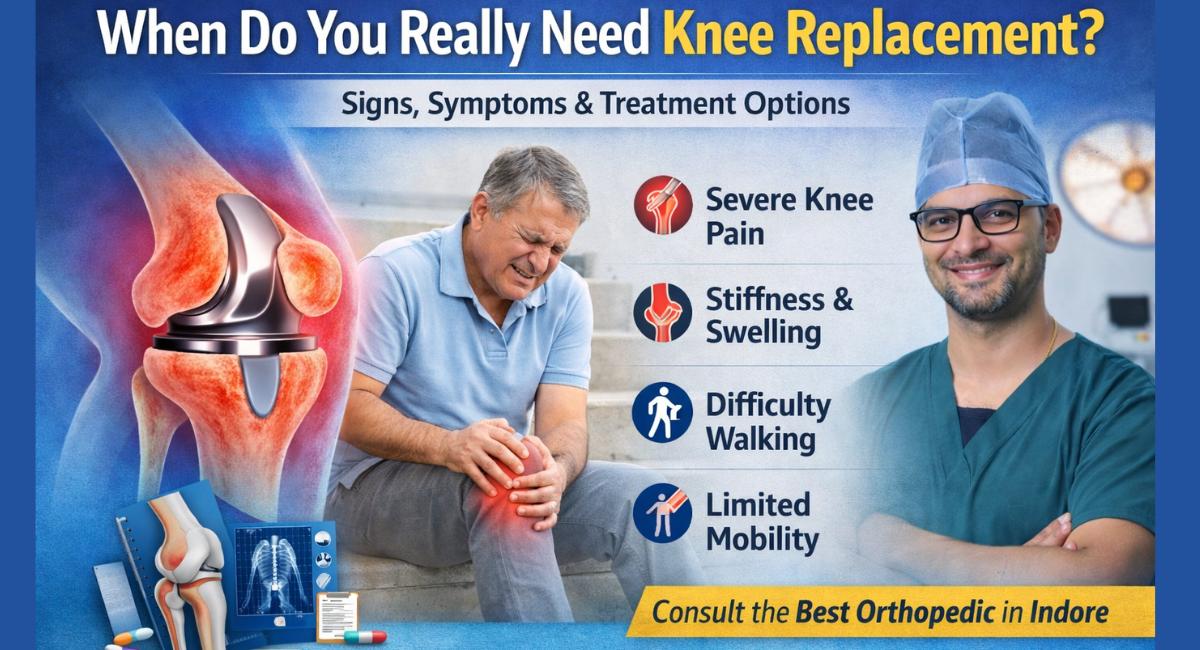
Not every knee pain requires surgery. However, certain symptoms indicate that it may be time to consult the best orthopedic in Indore for advanced treatment options.
1. Persistent Knee Pain
If your knee pain continues even after rest, medication, or physiotherapy, it may signal severe joint damage.
2. Difficulty in Daily Activities
Struggling with walking, climbing stairs, sitting, or standing is a major red flag.
3. Swelling and Stiffness
Chronic inflammation and reduced flexibility can indicate worsening joint conditions.
4. Limited Range of Motion
If you cannot fully bend or straighten your knee, it may require surgical intervention.
5. No Relief from Non-Surgical Treatments
When physiotherapy, medications, or injections fail to provide relief, surgery becomes a viable option.
6. Deformity in the Knee
Visible changes like bowing in or out of the knee are signs of advanced joint damage.
When Should You Consider Surgery?
Timing plays a crucial role in knee replacement success. According to the best orthopedic in Indore, you should consider surgery when:
- Pain interferes with sleep
- Mobility is significantly reduced
- Quality of life is affected
- Conservative treatments no longer work
Delaying surgery in such cases may worsen the condition and make recovery more difficult.
Non-Surgical Treatment Options
Before recommending surgery, doctors usually explore non-invasive methods:
1. Physiotherapy
Strengthening exercises improve joint stability and reduce pain.
2. Medications
Pain relievers and anti-inflammatory drugs provide temporary relief.
3. Lifestyle Changes
Weight management and low-impact activities help reduce stress on knees.
4. Injections
Steroid or hyaluronic acid injections can reduce inflammation and improve lubrication.
The best orthopedic in Indore often suggests trying these treatments first, especially in early or moderate stages.
Types of Knee Replacement Surgery
If surgery becomes necessary, there are different types based on the severity of damage:
1. Total Knee Replacement (TKR)
The entire knee joint is replaced with artificial components.
2. Partial Knee Replacement (PKR)
Only the damaged part of the knee is replaced.
3. Revision Knee Replacement
Performed when a previous knee replacement fails or wears out.
Your doctor will recommend the most suitable option based on your condition.
Recovery After Knee Replacement
Recovery is a crucial part of the treatment process. With proper care and guidance from the best orthopedic in Indore, most patients experience significant improvement.
Recovery Timeline:
- First few weeks: Pain management and basic movement
- 4–6 weeks: Improved mobility with physiotherapy
- 3 months: Return to most daily activities
- 6 months to 1 year: Full recovery
Rehabilitation Tips:
- Follow physiotherapy regularly
- Maintain a healthy weight
- Avoid high-impact activities
- Keep your joints active
Benefits of Knee Replacement Surgery
When done at the right time, knee replacement offers several advantages:
- Long-term pain relief
- Improved mobility
- Better quality of life
- Increased independence
- Ability to return to normal activities
Most patients report a significant improvement in their daily routine after surgery.
Risks to Be Aware Of
Like any surgery, knee replacement also carries some risks:
- Infection
- Blood clots
- Implant wear over time
- Temporary stiffness
However, choosing an experienced specialist minimizes these risks and ensures better outcomes.
How to Prevent Knee Problems
Prevention is always better than cure. Here are some tips to keep your knees healthy:
- Stay physically active
- Maintain a healthy weight
- Avoid excessive strain on joints
- Practice proper posture
- Wear supportive footwear
Regular check-ups with the best orthopedic in Indore can also help detect issues early.
Final Thoughts
Knee replacement is not the first solution—but it becomes the best option when all other treatments fail to provide relief. Ignoring symptoms can lead to severe joint damage and reduced quality of life.
The key is early diagnosis, proper evaluation, and timely decision-making. Consulting the best orthopedic in Indore ensures you receive the right guidance and personalized treatment plan.
If knee pain is affecting your daily life, don’t wait. Take the first step toward a pain-free and active future today.