
When dealing with joint pain, sports injuries, fractures, or chronic musculoskeletal conditions, one of the most common dilemmas patients face is choosing between physiotherapy and surgery. Both treatment approaches have their advantages, but selecting the right one depends on the nature and severity of the problem. According to the best orthopedic in Indore, making the right decision at the right time can significantly impact recovery, mobility, and overall quality of life.
In this blog, we’ll explore the differences between physiotherapy and surgery, when each is appropriate, and what experts recommend for optimal healing.
Understanding Physiotherapy: A Non-Invasive Path to Recovery
Physiotherapy is often the first line of treatment for many orthopedic conditions. It focuses on improving mobility, strengthening muscles, reducing pain, and restoring normal function without the need for surgical intervention.
Physiotherapy includes techniques such as:
- Manual therapy
- Exercise therapy
- Electrotherapy
- Postural correction
- Stretching and strengthening routines
For conditions like back pain, frozen shoulder, mild ligament injuries, and early-stage arthritis, physiotherapy can be highly effective. The best orthopedic in Indore typically recommends starting with physiotherapy because it addresses the root cause of the issue rather than just the symptoms.
Key Benefits of Physiotherapy:
- Non-invasive and safe
- Minimal side effects
- Faster recovery in less severe cases
- Helps prevent recurrence of injuries
- Improves overall physical fitness and flexibility
Another advantage is that physiotherapy empowers patients to take an active role in their recovery, which often leads to better long-term outcomes.
When Surgery Becomes the Better Option
While physiotherapy offers numerous benefits, it may not always be sufficient—especially in severe or complex cases. Surgery is typically recommended when there is structural damage that cannot heal on its own or when conservative treatments fail to provide relief.
Situations where surgery may be necessary include:
- Severe fractures or bone dislocations
- Advanced osteoarthritis requiring joint replacement
- Torn ligaments such as ACL injuries
- Herniated discs pressing on nerves
- Chronic pain that doesn’t respond to physiotherapy
In such cases, the best orthopedic in Indore emphasizes that timely surgical intervention can prevent further damage and restore proper function.
Advantages of Surgery:
- Directly addresses structural issues
- Provides long-term relief in severe cases
- Can significantly improve mobility and quality of life
- Often necessary for complete recovery in certain injuries
However, surgery also comes with risks such as infection, longer recovery time, and higher costs. This is why it is usually considered only after non-invasive methods have been explored.
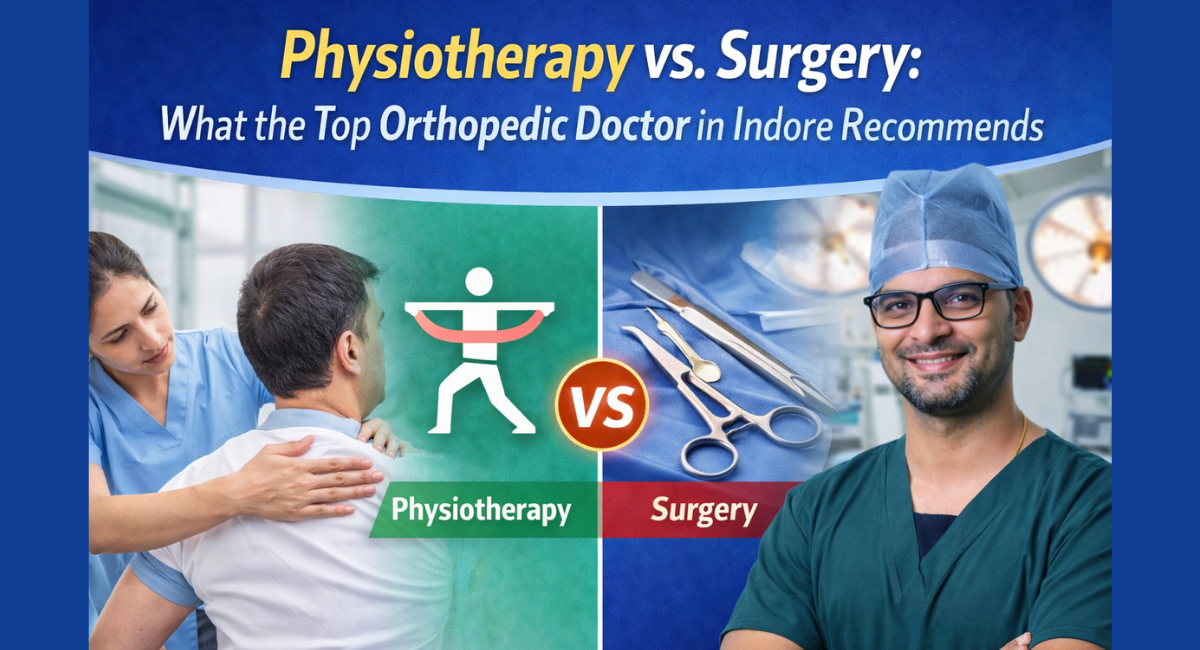
Physiotherapy vs. Surgery: A Comparative Overview
Understanding the differences between physiotherapy and surgery can help patients make informed decisions.
- Nature of Treatment: Physiotherapy is non-invasive, while surgery involves operative procedures.
- Recovery Time: Physiotherapy often requires gradual improvement over weeks, whereas surgery may involve a longer but more definitive recovery period.
- Risk Factor: Physiotherapy carries minimal risks, while surgery includes potential complications.
- Cost: Physiotherapy is generally more affordable compared to surgical procedures.
- Effectiveness: Physiotherapy works best for mild to moderate conditions, while surgery is ideal for severe cases.
The best orthopedic in Indore suggests that patients should not rush into surgery without first considering conservative treatments, unless the condition demands immediate intervention.
The Importance of Early Diagnosis
One of the most crucial factors in deciding between physiotherapy and surgery is early and accurate diagnosis. Many orthopedic conditions worsen over time if left untreated. Early intervention can often eliminate the need for surgery altogether.
Diagnostic tools such as X-rays, MRIs, and physical examinations help determine the extent of the injury or condition. Based on these findings, the best orthopedic in Indore creates a tailored treatment plan that aligns with the patient’s specific needs.
Personalized Treatment: No One-Size-Fits-All Approach
Every patient is different, and so is every orthopedic condition. Factors such as age, lifestyle, occupation, medical history, and activity level all play a role in determining the most suitable treatment.
For example:
- A young athlete with a ligament injury may benefit from a combination of physiotherapy and minimally invasive surgery.
- An elderly patient with joint pain may respond well to physiotherapy and lifestyle modifications.
- A working professional with back pain might recover completely with posture correction and guided exercises.
The best orthopedic in Indore always prioritizes personalized care to ensure the best possible outcomes.
Combining Both Approaches for Best Results
In many cases, physiotherapy and surgery are not mutually exclusive—they complement each other. Physiotherapy plays a vital role both before and after surgery.
Pre-surgery physiotherapy helps strengthen the body and prepare it for better recovery.
Post-surgery rehabilitation is essential for restoring mobility, flexibility, and strength.
This combined approach ensures faster healing and reduces the chances of complications or re-injury. According to the best orthopedic in Indore, patients who follow a structured rehabilitation program recover more effectively and regain normal function sooner.
Common Myths About Physiotherapy and Surgery
There are several misconceptions that often influence patient decisions:
- Myth: Surgery provides instant results.
Reality: Surgery requires significant recovery time and rehabilitation. - Myth: Physiotherapy is only for minor issues.
Reality: It can effectively treat many moderate conditions and even prevent surgery. - Myth: Once you opt for physiotherapy, surgery is no longer an option.
Reality: Surgery can still be considered if physiotherapy doesn’t work.
The best orthopedic in Indore advises patients to rely on expert consultation rather than assumptions or fear.
Final Thoughts
Choosing between physiotherapy and surgery is not always easy, but the right medical guidance can simplify the decision. In many cases, physiotherapy offers a safe and effective path to recovery without the risks associated with surgery. However, when the condition is severe or unresponsive to conservative treatment, surgery becomes necessary for long-term relief.
The key lies in timely diagnosis, proper evaluation, and a personalized treatment plan. Consulting the best orthopedic in Indore ensures that you receive the most appropriate care tailored to your condition.
Ultimately, the goal of both physiotherapy and surgery is the same—to restore mobility, reduce pain, and improve your overall quality of life. Making an informed decision with expert advice will help you achieve the best possible outcome and get back to living an active, pain-free life.